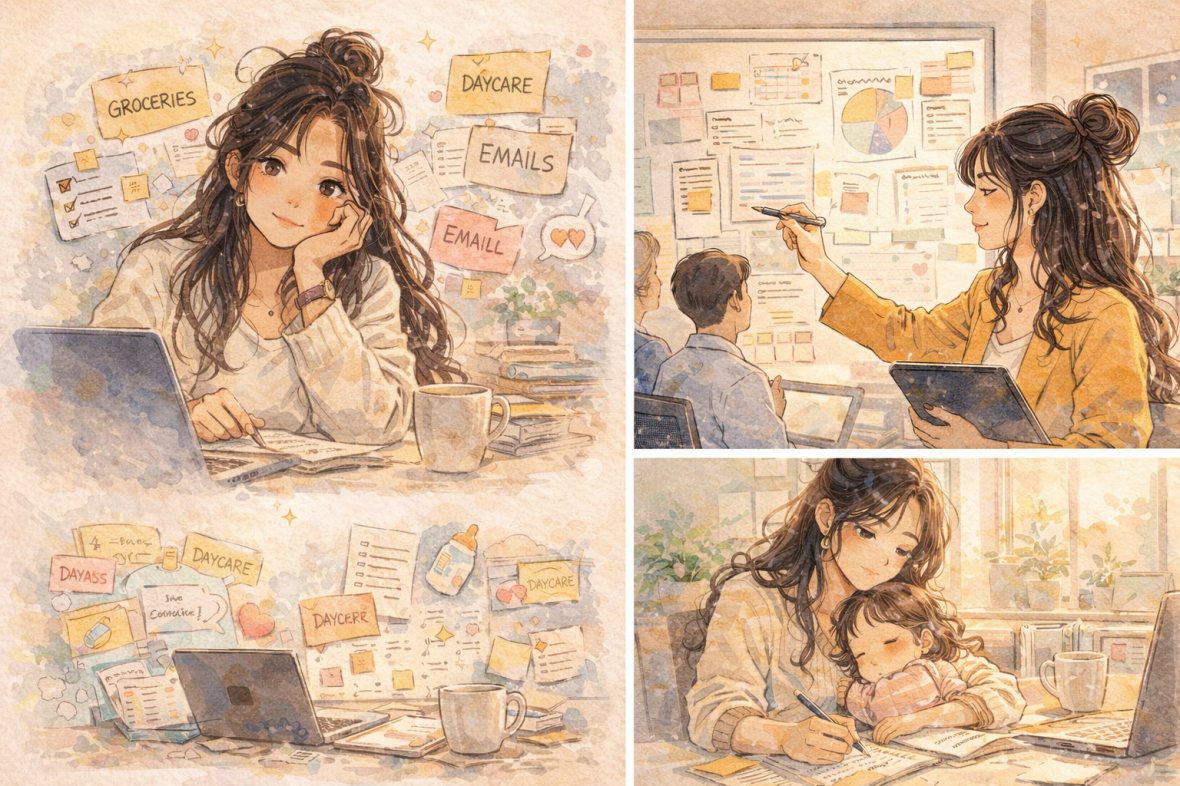

It usually starts with something small.
You’re standing in the kitchen at 10:47 p.m. The house is finally quiet. The baby monitor is glowing softly on the counter. There are three emails you promised yourself you’d answer tonight. A load of laundry waiting to be folded. And somehow, you’re also Googling whether a 14-month-old should still be drinking milk before bed.
You pause for a moment and think: Why am I this tired?
Not tired in the “I didn’t sleep well” way.
Tired in the deep, quiet, bone-level way.
The kind of tired that doesn’t come from doing nothing. It comes from doing everything.
If you’re a high-achieving woman, this scene probably feels familiar.
Because burnout for women like us doesn’t usually arrive dramatically. It doesn’t crash through the door.
It quietly moves in.
The Achievement Trap
High-achieving women are rarely strangers to responsibility.
Many of us grew up believing that competence was our superpower. Work hard. Be reliable. Deliver results. Don’t complain.
My career has been rooted in Human Resources and career development. For years I worked at the University of Toronto helping students navigate internships and career paths across industries and countries. I’ve spent countless hours advising ambitious young people on how to build meaningful careers.
And here’s something I’ve noticed.
The most capable people often become the most overloaded.
Why?
Because when you’re good at things, people give you more things.
More projects.
More committees.
More responsibility.
More emotional labor.
You become the person who can “handle it.”
And for a long time, you probably can.
Until you can’t.
The Invisible Second Shift
Let’s talk about the part no one writes in the job description.
The second shift.
Even when women succeed professionally, most are still quietly managing the home front.
Schedules.
Meals.
Doctor appointments.
Family logistics.
Emotional temperature checks for everyone in the household.
Now add motherhood into the mix.
Suddenly you’re navigating things no leadership course ever prepared you for:
Is the baby coughing too much?
How many drops of Vitamin D should a toddler have?
Why does the cough sound worse at night?
I laugh sometimes when I look at my own search history. Half of it is about career strategy or business ideas. The other half is things like baby milk ratios and toddler coughs.
Welcome to modern womanhood.
We’re expected to operate like CEOs at work and pediatric nurses at home.
And we’re supposed to do both well.
The Competence Tax
There’s a quiet tax that capable women pay.
I call it the competence tax.
If you’re organized, you become the default planner.
If you’re emotionally intelligent, you become the default mediator.
If you’re responsible, you become the default fixer.
At work, this might look like managing the project that nobody else wants.
At home, it might mean being the one who always knows where the extra diapers are.
Over time, competence stops feeling like a strength and starts feeling like gravity.
Everything falls toward you.
Leadership Was Supposed to Feel Better Than This
Here’s the strange paradox.
Many high-achieving women reach the very milestones they worked so hard for — and still feel exhausted.
Leadership roles.
Professional recognition.
Meaningful careers.
On paper, everything looks impressive.
But inside, the energy tank is running low.
Why?
Because success expanded the workload but didn’t necessarily reduce the expectations in other areas of life.
In fact, expectations often increase.
You’re now expected to be:
- A strategic leader
- A thoughtful mentor
- A present parent
- A supportive partner
- A socially engaged community member
And ideally someone who also drinks enough water, exercises regularly, and practices mindfulness.
No pressure.
When Burnout Is Quiet
The burnout we often hear about is dramatic.
People quitting jobs. Public breakdowns. Career pivots.
But for many high-achieving women, burnout is much quieter.
It looks like functioning well… but feeling constantly depleted.
You still meet deadlines.
You still show up.
You still perform.
But something inside feels dimmer than it used to.
The spark isn’t gone. It’s just buried under layers of responsibility.
And because you’re still capable, no one notices.
A Personal Reflection
Becoming a mother changed how I see all of this.
Before my daughter was born, my identity was deeply tied to productivity and contribution. My career had always been about helping people build paths forward. I believed strongly in ambition, growth, and opportunity.
I still do.
But motherhood added a new lens.
Suddenly, I understood in a very real way how much invisible labor women carry.
The mental load.
The emotional load.
The constant background thinking.
Even on days when I’m not working in a formal office environment, my brain is still solving problems, managing logistics, planning ahead.
Motherhood didn’t reduce my ambition.
But it did make me question the idea that we should be able to carry everything indefinitely.
No one can.
Not sustainably.
The Cultural Expectation Problem
There’s also a cultural story at play.
For decades, society pushed for women to enter leadership, build careers, and claim space in professional environments.
That progress matters.
But something else quietly happened along the way.
Instead of redistributing responsibilities, we simply added more roles onto women.
Be a professional.
Be a perfect parent.
Be emotionally available.
Be socially engaged.
Be healthy, polished, and positive while doing it all.
The result?
Women became incredibly capable multi-system operators… with almost no margin for rest.
So What Actually Helps?
Burnout doesn’t disappear overnight.
But awareness is a powerful first step.
When high-achieving women recognize that the overload isn’t a personal failure — it’s often a structural reality — something shifts.
We start asking better questions.
What actually matters most right now?
What expectations are real… and which ones did I inherit without questioning?
Where can I create breathing room?
And perhaps most importantly:
What does success look like in this season of life?
Because success at 25, 35, and 45 will likely look very different.
And that’s okay.
A Different Kind of Strength
High-achieving women aren’t burning out because they’re weak.
They’re burning out because they’re strong enough to carry too much for too long.
But strength isn’t just about endurance.
It’s also about recalibration.
About choosing where your energy goes.
About recognizing that you don’t have to prove your capability every single day.
Sometimes the most powerful thing a high-performing woman can do is simply pause and ask:
What kind of life am I actually trying to build?
Not just the impressive one.
The sustainable one.
And maybe — just maybe — the answer includes a little more breathing room.
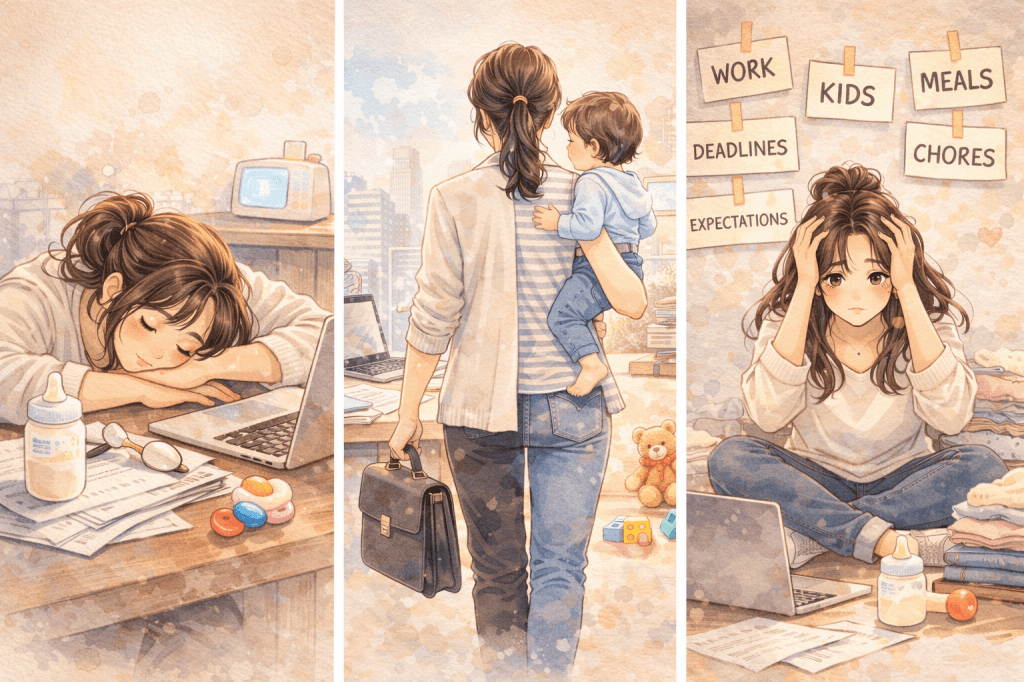
 Modern Boss Lady