
Blog

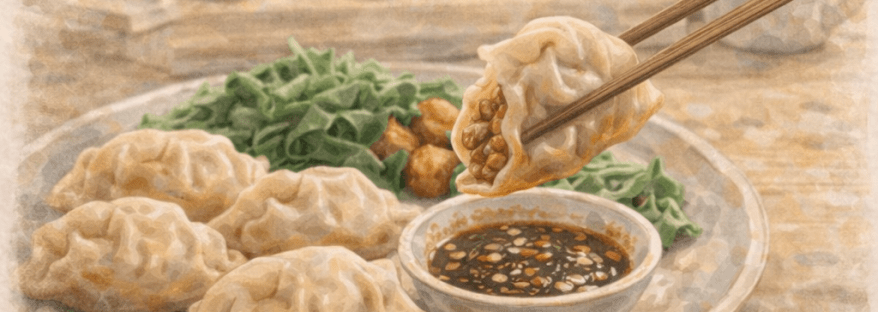
High-Protein “Brain Fuel” Dumplings

The Meal I Default To When My Brain Is Fried

You know that moment when it’s 12:30 p.m., you’ve already answered 20 emails, your toddler has thrown snacks on the floor twice, and suddenly you realize… you forgot to eat?

That’s usually when my brain stops working.

Not dramatically. Just enough that the question “What should I eat?” feels like a PhD exam.

On those days, dumplings save me.

They are my default meal when life gets busy and decision-making energy is low. I’ll grab a bag of pork or beef dumplings from the grocery store, pan fry them, and throw some vegetables on the side. Suddenly I’ve got a meal that checks every box: carbs for energy, protein for focus, and vegetables so I feel like an adult who has their life together.

Simple. Fast. Surprisingly balanced.

And honestly? It’s one of the few meals that never feels like a compromise.


When Food Needs to Work as Hard as You Do

Modern life requires a lot of brainpower.

Whether you’re running meetings, raising kids, building a career, or just trying to remember where you left your phone for the third time today… your brain burns a surprising amount of energy.

Yet most “quick meals” we reach for are basically carbs in disguise.

Toast. Crackers. Instant noodles. A handful of snacks grabbed between tasks.

They fill the stomach, but they don’t really fuel the brain.

Protein, on the other hand, is the quiet hero of mental stamina. It helps stabilize blood sugar, keeps you full longer, and supports focus.

Which is why dumplings are secretly such a brilliant meal.

The filling usually includes:

  • Pork, chicken, shrimp, or beef
  • Sometimes tofu
  • Often cabbage or chives

Wrap that in a thin dumpling skin and suddenly you’ve got a little parcel of protein and carbs working together.

Think of them as tiny edible productivity tools.


The Lazy Genius Meal Formula

When I make dumplings for a quick lunch or dinner, I follow a very simple formula:

Dumplings + Vegetables = Complete Meal

That’s it.

I’ll pan fry a dozen dumplings until the bottoms get crispy, then steam them with a splash of water.

While that’s happening, I’ll quickly sauté whatever vegetables are in the fridge. Bok choy, broccoli, green beans, spinach — anything works.

Within 10 minutes, I’ve got:

  • Protein from the filling
  • Carbs from the wrapper
  • Fiber and nutrients from the vegetables

Balanced meal. Minimal thinking required.

As someone who loves efficiency, this formula makes me weirdly happy.


The Secret Productivity Hack: Freezer Dumplings

Here’s the thing most people don’t realize about dumplings.

They’re one of the best freezer meals on earth.

When you make dumplings, you rarely make just ten.

You make one hundred.

Maybe two hundred if friends are involved.

Then you freeze them.

And suddenly your future self has dozens of meals waiting in the freezer.

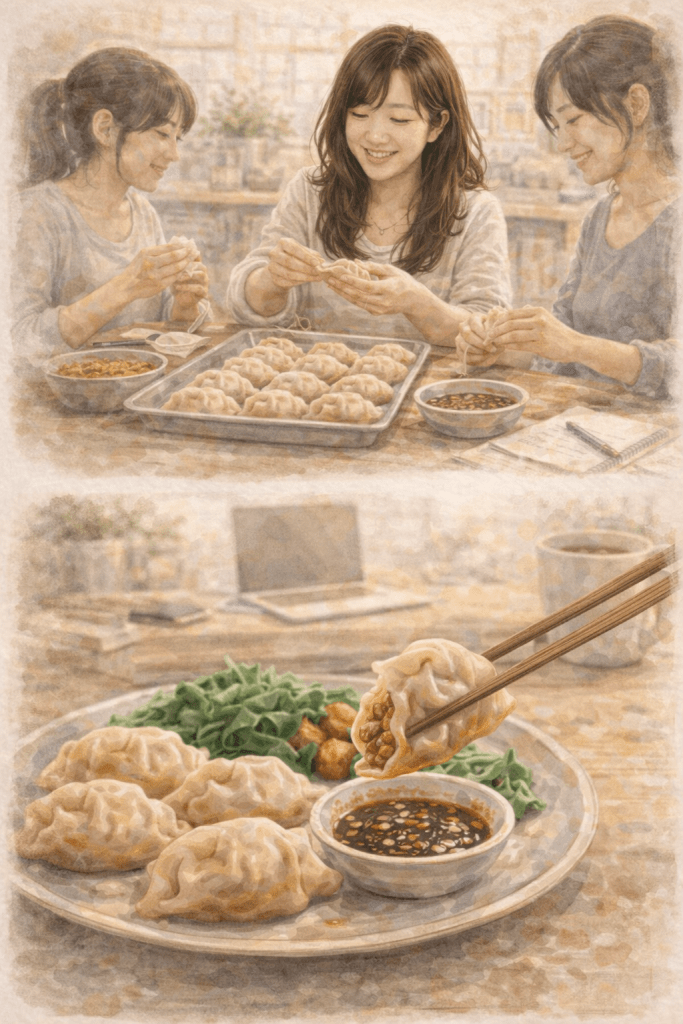
This is one of the reasons I love making dumplings with friends.

It’s productive and social at the same time.

You sit around a table, folding dumplings, chatting about life, work, relationships, whatever is happening that week. There’s something calming about the rhythm of it — scoop filling, fold wrapper, repeat.

By the end of the afternoon, you’ve created an entire stash of ready-to-cook meals.

Future lunch problems? Solved.


Why Cooking With Friends Feels Different

Some of my favorite food memories involve cooking with other people.

Not fancy dinners.

Just simple food projects.

Dumplings are perfect for this because the work is repetitive but not stressful. Once someone shows you how to fold them, everyone can participate.

There’s a quiet kind of teamwork that happens around the table.

Someone mixes the filling.

Someone lays out wrappers.

Someone else becomes the “folding expert.”

And in between, there’s conversation.

We talk about careers. Relationships. Parenting. Work frustrations. Random stories.

It’s funny how food preparation becomes a space for deeper conversations.

Maybe because our hands are busy and our phones are away.

Or maybe because feeding people has always been a way humans connect.

Either way, dumpling days never feel like chores.

They feel like community.


My Go-To High-Protein Dumpling Setup

When life gets busy and I need something quick, this is my standard setup.

Ingredients

  • Frozen pork or chicken dumplings (store-bought or homemade)
  • 1–2 cups vegetables (bok choy, broccoli, spinach, or green beans)
  • 1 tbsp soy sauce
  • 1 tsp sesame oil

My Secret Dumpling Sauce

  • Black vinegar
  • A splash of perilla oil
  • A touch of garlic chili sauce

Mix together and adjust to taste. It’s tangy, slightly nutty, and just spicy enough to wake up your brain.

Instructions

  1. Heat a pan with a little oil on medium heat.
  2. Place dumplings flat-side down and cook until the bottoms turn golden.
  3. Add a splash of water and cover the pan to steam for about 4–5 minutes.
  4. Meanwhile, sauté vegetables in another pan with soy sauce and sesame oil.
  5. Plate dumplings and vegetables together. Dip generously in the sauce.

Ten minutes, one pan, and you’ve got a high-protein meal that actually satisfies.


A Small Lesson I’ve Learned About Food

When I was younger, I used to think good cooking meant complicated cooking.

Fancy ingredients.

Long recipes.

Multiple steps.

Now I see it differently.

The best meals — especially during busy seasons of life — are the ones that work with your lifestyle instead of against it.

Food shouldn’t add stress to your day.

It should support your energy.

It should make life easier.

And sometimes that means leaning on smart shortcuts.

Like dumplings.


Tiny Food, Big Energy

There’s something quietly comforting about dumplings.

Maybe it’s the shape.

Maybe it’s the fact that so many cultures have their own version of them.

Or maybe it’s because they’re the ultimate “small effort, big reward” food.

For me, they represent balance.

You can buy them when life is busy.

You can make them with friends when life slows down.

You can freeze them for the future.

And on the days when your brain feels fried and lunch decisions feel impossible… they’re always there.

Little pockets of protein, carbs, and comfort.

Honestly, modern women deserve more meals like that.
Blog, The Modern Woman

Guilt: The Currency Women Pay With

The other night I checked the baby monitor for the fifth time in ten minutes.

The room was quiet. My daughter was asleep. Completely fine.

And yet, I still stared at the screen.

You know that feeling, right? That strange background noise in your brain that says: Are you doing enough? Did you miss something? Should you be doing something else right now?

Motherhood has introduced me to a new level of mental gymnastics, but if I’m honest, this feeling didn’t start when I became a mom.

Women have been paying with guilt for a very long time.

We just didn’t realize it was the currency.


The Quiet Transaction We Make Every Day

Here’s the thing about guilt.

It rarely arrives dramatically.

It sneaks in quietly during completely normal moments.

Like when you’re working and wondering if you should be spending more time with your child.

Or when you’re with your child and wondering if you’re falling behind in your career.

Or when you decide to rest and suddenly feel like you’ve committed a moral crime.

Somehow, women have been conditioned to believe that every decision must be accompanied by a small emotional payment.

Success?
Guilt.

Rest?
Guilt.

Ambition?
Definitely guilt.

Even joy sometimes feels like it needs to be justified.

It’s exhausting when you think about it.

And the frustrating part?

Most of this pressure isn’t even real. It’s inherited.


When “Doing Enough” Is Never Enough

One thing that quietly bothers me about modern work culture is the expectation that women should be able to do everything seamlessly.

Be an attentive mother.

Maintain a full-time career.

Be emotionally present for everyone.

Look composed while doing it.

And if you struggle? Well… try harder.

I’ve had people tell me something that still makes me laugh a little.

When I mentioned the idea of staying home for a while—even though my daughter is in daycare—someone told me that would be a waste of time.

A waste.

Isn’t that interesting?

Because when a man takes time to think, plan, or rest, it’s called strategy.

When a woman does it, suddenly we’re asked to justify our existence.

But here’s what I’ve realized recently:

Rest is not wasted time.

Thinking is not wasted time.

Raising a child is definitely not wasted time.

And neither is protecting your sanity.


The Invisible Achievements

Another thing I’ve started noticing since becoming a mom is how quickly women minimize their own accomplishments.

We call them “small wins.”

But are they really small?

The first time my daughter drank from a sippy cup without spilling everywhere.

The day she didn’t throw food onto the floor.

The moment she slept a little longer than usual.

These moments might seem tiny from the outside.

But when you’re living them? They feel monumental.

Yet somehow we still hear that voice in our head whispering:

That’s not a real achievement.

Why do we do that?

I think it’s because society only recognizes certain types of productivity.

Promotions.

Revenue.

Awards.

But the slow, patient work of building a life—or raising a human—rarely makes the highlight reel.

And so women quietly carry the guilt of “not doing enough,” even while doing everything.


The Mental Load No One Sees

There’s also the invisible layer of responsibility women carry.

The mental spreadsheets.

The emotional monitoring system.

The constant background awareness of everyone’s needs.

Even now, I sometimes experience something strange: phantom baby cries.

I’ll check the monitor convinced my daughter is crying… only to realize she’s completely asleep.

My brain has essentially installed a 24-hour alert system.

And I know I’m not alone in this.

Women are constantly tracking invisible variables:

Is everyone okay?
Did I forget something?
Am I falling behind somewhere?

It’s like running ten apps in the background of your brain all day long.

No wonder we’re tired.


What I’m Learning About Guilt

Lately, I’ve been questioning guilt more deliberately.

Not eliminating it completely—that’s probably unrealistic.

But interrogating it.

Is this guilt actually useful?

Or is it just leftover conditioning?

Because the truth is, guilt rarely improves our decisions.

It just makes us feel worse while making them.

I’m starting to believe something radical:

Maybe women don’t need more guilt.

Maybe we need permission.

Permission to rest.

Permission to pursue ambition.

Permission to redefine productivity.

Permission to value the invisible work of life.

And permission to stop apologizing for existing in multiple roles.


A Personal Realization

One of the things motherhood has taught me is that progress rarely looks glamorous.

It looks like tiny daily adjustments.

Tiny improvements.

Tiny moments that compound into something meaningful.

My daughter learning how to drink from a cup.

Me learning how to give myself grace.

Neither of those things will appear on a résumé.

But both matter.

A lot.

And maybe that’s the real lesson.

We’ve been measuring our worth with the wrong metrics.


Closing Thought

If guilt really is the currency women have been paying with, then maybe it’s time to change the economy.

Not every choice needs to be justified.

Not every moment needs to be optimized.

And not every woman needs to prove her value through exhaustion.

Sometimes the most radical thing a modern woman can do is simply say:

This life I’m building—messy, imperfect, and meaningful—is enough.

And refuse to pay guilt for it anymore.

Blog, Boss Moves

Why Women Underprice Themselves, Even When They Know Better

A while ago, I was talking to a woman about a service she offered. She was one of those people who could walk into a messy situation and quietly make everything better. Organized. Thoughtful. Extremely competent.

Her price?

Honestly… shockingly low.

So I asked her how she landed on that number.

She shrugged and said something that made my HR brain twitch.

“I just don’t want people to think I’m charging too much.”

And there it was.

Not a market strategy.
Not a pricing model.
Just fear.

The funny thing is, most women know when they’re underpricing themselves. They’re not clueless. They’re usually quite aware of it.

So the real question isn’t whether women recognize their value.

The real question is: why do we still discount it anyway?

After years working in HR, building programs, launching initiatives, and watching incredibly capable women around me do the same thing, I’ve noticed a few patterns.

Let’s talk about them.


The Likability Tax

One thing I learned very early in my HR career is that workplaces run on two currencies.

Money… and likability.

Men are often rewarded for being assertive.

Women?

We’re often rewarded for being agreeable.

It’s subtle, but powerful.

Women who negotiate firmly can sometimes be labeled “difficult.”
Women who push their value can sometimes be described as “a bit much.”

So many women develop a quiet internal pricing strategy that sounds something like this:

If my price is reasonable enough, no one will question it.

We shave a little off the number. Just to be safe.

Then a little more.

And before we know it, we’re charging far less than the value we actually create.

Because the goal wasn’t maximizing value.

The goal was avoiding discomfort.

But when pricing is built around likability instead of value, you’re essentially charging for being pleasant, not for being skilled.

And being pleasant is a terrible business model.


When Expertise Starts to Feel Ordinary

Another reason women underprice themselves is something I see constantly in high-achieving women.

Competence starts to feel ordinary.

When you’ve been solving problems for years, your brain quietly tells you:

“Well… anyone could have done that.”

But that’s rarely true.

I had a moment like this when I was working with the alumni office at the University of Toronto.

I helped launch a program called Lectures on Demand. At the time, it simply felt like a logical idea. Alumni loved attending lectures, but scheduling and accessibility were barriers. So we created a model where they could access talks on demand.

Nothing about it felt revolutionary to me.

It just felt like… a good solution.

When we launched it, about 5,800 alumni and community members signed up.

That alone was surprising.

But what really stood out was that over 1,000 of those people were previously unengaged alumni — people who hadn’t interacted with the university in years.

Suddenly they were back.

The program ended up becoming a really effective way to reconnect people to the institution. Other alumni departments actually started using it as a roadmap for their own versions of Lectures on Demand, adapting the idea to engage their own communities.

Looking back now, it was genuinely innovative.

At the time?

I barely paused to acknowledge it.

My brain immediately moved to the next problem to solve.

And that right there is the high-achiever trap.

When you’re used to producing results, you stop seeing those results as extraordinary.

You see them as the baseline.

But the marketplace doesn’t see it that way.

The marketplace sees impact.

And impact has value.

The problem is that women often price themselves based on how difficult something felt… instead of how valuable the outcome was.

If something feels easy to you, you assume it must not be worth that much.

Meanwhile, someone else is charging premium rates for something you can do before your morning coffee.

Expertise has a funny way of disguising itself like that.


The Guilt Economy

There’s another layer to this conversation that doesn’t get talked about enough.

Guilt.

Women are deeply socialized to think about everyone else’s comfort first.

So when it comes time to charge for something — whether it’s consulting, creative work, coaching, or a service — a quiet voice shows up.

What if people think I’m overcharging?
What if someone can’t afford it?
What if they stop supporting me?

We start negotiating against ourselves.

Before the other person even says a word.

It’s fascinating when you step back and look at the difference in mindset.

Men tend to ask:

“What is the market willing to pay?”

Women often ask:

“What will people feel comfortable paying?”

Those are two very different pricing strategies.

One is economic.

The other is emotional.

And emotional labor rarely pays well.


The High-Achiever Habit of Downplaying Wins

Another pattern I see — both in myself and in other ambitious women — is how quickly we move past our own accomplishments.

High achievers are wired to solve problems.

Once the problem is solved, we move on.

We don’t sit around admiring the solution.

For example, when I helped streamline a system for data collection and data entry in my department, it ended up saving a significant amount of time and administrative effort.

From a leadership perspective, that’s a meaningful operational improvement.

From my perspective at the time?

It just felt like fixing something that was inefficient.

And that’s exactly the thinking that leads women to underprice themselves.

We focus on the task we completed, not the value it created.

But organizations, businesses, and clients don’t pay for tasks.

They pay for outcomes.

They pay for the person who can walk into a messy system and quietly make it work better.

Sound familiar?


A Lesson I’m Still Learning

One thing motherhood has taught me recently is that growth often looks small while it’s happening.

Sometimes I watch my daughter and celebrate what might look like tiny wins to someone else.

Drinking from a sippy cup.

Not throwing food on the floor.

Learning a new skill.

These things might look small from the outside, but they’re actually big developmental leaps.

Progress often happens quietly.

The same thing happens in careers.

Skills accumulate.

Experience compounds.

You solve hundreds of small problems over time, and suddenly you’ve built expertise that other people genuinely need.

The problem is that we often forget to price that expertise accordingly.


Pricing Is Clarity, Not Confidence

Most career advice aimed at women says something like:

“Just be confident!”

Which sounds nice… but isn’t very practical.

Confidence doesn’t magically appear because someone posted an inspirational quote on LinkedIn.

A much more useful strategy is clarity.

Clarity about the value your work creates.

Ask questions like:

• What problem does this solve?
• How much time or stress does this save someone?
• What would it cost them to figure this out alone?
• What are others charging for similar expertise?

When you start answering those questions honestly, pricing becomes less emotional.

And more strategic.


The Truth About Pricing

Here’s something most experienced professionals eventually realize.

Someone will always think your price is too high.

Someone will always think your price is a bargain.

And someone will think it’s exactly right.

Pricing isn’t about pleasing everyone.

It’s about aligning your work with the value it creates.

The women who eventually stop underpricing themselves don’t suddenly become arrogant.

They simply become clearer.

Clear about their skills.
Clear about their time.
Clear about the problems they solve.

And once you see your value clearly…

It becomes much harder to discount it.

Because the truth is, you were never charging too much.

You were just charging too little.

Blog, The Friday Table

The 20-Minute “I’m Tired But Still Put Together” Dinner

aka: The meal you make when your brain has clocked out but you still want real food

The 6:07 p.m. Standoff With the Fridge

It’s 6:07 p.m.

You open the fridge and stare inside like it might reveal a hidden dinner plan.

You’re tired — not dramatic tired. Just the quiet, I have already made too many decisions today kind of tired.

Maybe you worked. Maybe you chased a toddler around all day. Maybe you did both, which honestly should count as an Olympic sport.

Cooking something elaborate? Absolutely not.

Ordering takeout again? Also tempting… but something inside you whispers, You have food at home.

So now you’re standing there negotiating with yourself.

You want something warm. Something comforting. Something that doesn’t require Googling seventeen ingredients.

But ideally something that still feels like a real meal.

Not a random collection of snacks eaten over the sink.

This is exactly where the 5-ingredient TikTok dinner saves the day.

And yes — the internet occasionally gets something very right.


Why Simple Dinners Feel Like a Small Victory

Somewhere along the way, dinner became weirdly complicated.

Meal prep plans. Grocery strategies. Twenty-step recipes.

But when life is full — work, family, the mental load of everything — the meals that actually stick are the ones that are stupidly simple but surprisingly good.

That’s the sweet spot.

Low effort.
High reward.
Minimal thinking required.

Which brings us to the recipe that quietly took over TikTok, Instagram, and basically every tired person’s kitchen.

The Viral Baked Feta Pasta.

It became famous for one reason:

You throw everything in a dish, put it in the oven, and somehow it transforms into a creamy pasta sauce.

No culinary gymnastics required.

Honestly? It feels like cheating.


The 5-Ingredient TikTok Dinner: Viral Baked Feta Pasta

This recipe is beloved online because it’s practically impossible to mess up.

You roast feta and tomatoes together until they become creamy magic.

That’s it.

Ingredients (Serves 2–3)

Only five ingredients:

  • 250g pasta (penne, rigatoni, or fusilli work best)
  • 1 block feta cheese
  • 2 cups cherry tomatoes
  • 2 cloves garlic
  • Fresh basil (optional but highly recommended)

Pantry basics:

  • Olive oil
  • Salt
  • Pepper

That’s the whole list.

No complicated shopping. No mystery ingredients.

Just normal food doing extraordinary things.


How to Make It (Effort Level: Extremely Manageable)

Step 1: Preheat and assemble

Preheat your oven to 400°F (200°C).

Grab a small baking dish and toss in:

  • Cherry tomatoes
  • Whole garlic cloves

Drizzle generously with olive oil.

Place the block of feta right in the middle of the tomatoes like it’s the star of the show.

Because it is.

Sprinkle with salt and pepper.


Step 2: Bake the magic

Put the dish in the oven for 20 minutes.

During this time something wonderful happens.

The tomatoes blister and release their juices.

The feta softens into a creamy, tangy cloud.

Your kitchen starts smelling like someone who definitely has their life together.


Step 3: Cook the pasta

While the feta and tomatoes bake, cook your pasta according to package instructions.

Before draining, reserve about ½ cup pasta water.

This step helps make the sauce silky later.

TikTok chefs are very serious about pasta water.


Step 4: Stir everything together

Remove the baking dish from the oven.

Now take a spoon and gently mash the feta and tomatoes together.

Suddenly it becomes this creamy, roasted tomato sauce.

It’s oddly satisfying.

Add the cooked pasta directly into the dish.

Splash in a little pasta water and toss everything together.

Finish with torn basil.

And just like that… dinner exists.


The Personal Reflection: My “Minimum Effort, Maximum Comfort” Rule

Before becoming a mom, cooking had a different vibe.

It was a hobby. An experiment. Something I had energy for.

Now?

Dinner often happens somewhere between “my brain is tired” and “everyone still needs to eat.”

And I’ve learned something important.

Meals don’t need to be complicated to be meaningful.

Sometimes the best dinners are the ones that quietly come together without stress.

No pressure. No perfection.

Just warm food at the end of a long day.

There’s something grounding about that.

Especially when the rest of life feels like a juggling act.


Why This Recipe Went Viral

The internet loves efficiency.

And this recipe is the culinary version of work smarter, not harder.

Five ingredients.
One dish.
Twenty minutes.

That’s it.

But the real secret?

It feels comforting.

Creamy pasta hits that deep part of the brain that says, Yes. This is exactly what I needed.

It’s the kind of meal that works on busy weeknights, lazy Sundays, or those evenings when you’re simply running on fumes.

Which — if we’re being honest — happens more often than we admit.


The Quiet Confidence of an Easy Dinner

There’s a certain confidence in keeping things simple.

You didn’t overthink dinner.
You didn’t stress yourself out.

You just made something good.

And when you sit down with a warm bowl of creamy pasta that took less time than scrolling Instagram… it feels like a tiny life win.

Because sometimes the goal isn’t culinary greatness.

It’s simply feeding yourself well enough to keep going.

So tonight, if you find yourself staring into the fridge at 6:07 p.m., remember:

You don’t need a complicated recipe.

You just need five ingredients, twenty minutes, and a block of feta.

Honestly?

That’s more than enough.

Blog

My Brain Doesn’t Turn Off Anymore

…And I Think My Daughter Knows It!

I was standing in my kitchen holding a baby bottle in one hand and my phone in the other.

Not in a rush.
Not behind on anything.
No one was crying.

Which, honestly, already felt suspicious.

And yet my brain was running like I had 15 deadlines.

When did she last eat?
Should I pump now or later?
Her nap felt short—does that mean tonight is going to be chaotic?
I should write my Wednesday blog.
Why am I thinking about my blog right now?
Did I reply to that message?
Do I even want to go back to work?

And then I caught myself and thought—

Why does my brain feel like it’s working harder than I am?


My Brain Has Too Many Tabs Open

Before having a baby, I thought being busy meant having a lot to do.

Now I think it just means having too many things living rent-free in your head.

My brain feels like a browser with 37 tabs open.
And none of them are fully loading.

Even when everything is technically “fine,” there’s always something running in the background.

Feeding. Sleep. Development.
My blog. My future. My career.
Whether I’m doing enough.
Whether I’m doing too much.

And the weirdest part is—

From the outside, it probably looks like I’m just at home.

Relaxing.

Which… is honestly kind of offensive.


It’s Not Hard in the Way I Expected

I always thought motherhood would be physically hard.

Like lack of sleep, exhaustion, recovery.

And yes, those things exist.

But no one really explains this part.

It’s not always hard in a dramatic, chaotic way.

It’s hard in a constant, low-level, never-fully-off kind of way.

Even when I sit down to rest, my brain doesn’t.

It just switches to background processing.

How long has she been asleep?
Should I pump now?
If I don’t pump now, will I regret it later?
Why is everything suddenly a future problem?

There’s no off switch.

Just… dim mode.


The Guilt… But Honestly It’s a Bit Confusing

I’ve noticed this weird, low-level guilt that shows up at random times.

Not dramatic guilt.

More like… slightly annoying guilt.

Like when I sit down at night to write.

Part of me is like—
Ooo, creative outlet. Growth. Love this for me.

And then another part of me is like—
You know you could just… sleep, right?

And I genuinely don’t know which version of me is right.

Because this doesn’t feel like “work.”

But it also doesn’t feel like “rest.”

It just feels like me trying to stay connected to a version of myself that existed before everything revolved around feeding schedules.


And honestly, motherhood has a way of humbling you immediately anyway.

Like the other night—

My daughter woke up crying in the middle of the night.

My husband picked her up, trying to soothe her.
Bouncing, rocking, doing everything he’s supposed to do.

She was not having it.

Full protest.

You could feel his frustration building.

And then he hands her to me—

And within what felt like three seconds, she just… settles.

Quiet. Calm. Back to sleep.

Like nothing happened.

And I’m standing there like—

Oh. So this is my role now.

Which sounds sweet.

Until you realize it means you are now the default setting.

At 2 AM.
At 3 AM.
At whatever time she decides.

No escalation path. No backup system.

Just me.


The Part I Don’t Say Out Loud Often

Here’s something I don’t love admitting.

Some days, I miss working.

Not the stress. Not the meetings.

But the structure.

Work had edges.

You start something, you finish it, and you can point to it and say—
“I did that.”

Motherhood doesn’t really work like that.

It’s the same loop, over and over again.

Feed. Change. Soothe. Repeat.

And somehow the entire day disappears, and you’re like—

What did I actually do today?

Even though you were doing things all day.


At the same time…

I don’t actually want to go back.

Because the idea of managing this mental load and a full-time job?

That feels like a completely different level of chaos.

So now I’m in this weird space where:

  • I don’t want my old life back
  • But I’m still adjusting to this one

And somehow both feel true.


“You Chose This” — I Know, I Know

There’s this quiet voice that pops up sometimes—

Well… you chose this.

And yes, I did.

I wanted this.

But I don’t think choosing something means you instantly know how to carry it.

Or that every part of it will feel natural.

Or that you won’t miss parts of your old life while still loving this one.

I think it’s possible to love something deeply…
and still feel overwhelmed by it.


So… Is This Just My Brain Now?

I don’t really have a clean answer.

No system. No solution. No “here’s what works.”

Just this—

My brain feels fuller than it ever has before.

Not in a productive, ambitious way.

But in a constant, always-on, slightly chaotic kind of way.

And I’m still figuring out how to live inside that without feeling like I’m always slightly behind… or slightly not doing enough.

Maybe this is just a season.

Maybe this is just what becoming a mom in your late 30s feels like.

Or maybe this is just me now.

I don’t know yet.

But I do know this—

If this is what other women are quietly carrying too…
it makes a lot more sense why we’re all so tired.

Blog, Boss Moves

Why High Achieving Women Quietly Burn Out?

It usually starts with something small.

You’re standing in the kitchen at 10:47 p.m. The house is finally quiet. The baby monitor is glowing softly on the counter. There are three emails you promised yourself you’d answer tonight. A load of laundry waiting to be folded. And somehow, you’re also Googling whether a 14-month-old should still be drinking milk before bed.

You pause for a moment and think: Why am I this tired?

Not tired in the “I didn’t sleep well” way.

Tired in the deep, quiet, bone-level way.

The kind of tired that doesn’t come from doing nothing. It comes from doing everything.

If you’re a high-achieving woman, this scene probably feels familiar.

Because burnout for women like us doesn’t usually arrive dramatically. It doesn’t crash through the door.

It quietly moves in.

The Achievement Trap

High-achieving women are rarely strangers to responsibility.

Many of us grew up believing that competence was our superpower. Work hard. Be reliable. Deliver results. Don’t complain.

My career has been rooted in Human Resources and career development. For years I worked at the University of Toronto helping students navigate internships and career paths across industries and countries. I’ve spent countless hours advising ambitious young people on how to build meaningful careers.

And here’s something I’ve noticed.

The most capable people often become the most overloaded.

Why?

Because when you’re good at things, people give you more things.

More projects.
More committees.
More responsibility.
More emotional labor.

You become the person who can “handle it.”

And for a long time, you probably can.

Until you can’t.

The Invisible Second Shift

Let’s talk about the part no one writes in the job description.

The second shift.

Even when women succeed professionally, most are still quietly managing the home front.

Schedules.
Meals.
Doctor appointments.
Family logistics.
Emotional temperature checks for everyone in the household.

Now add motherhood into the mix.

Suddenly you’re navigating things no leadership course ever prepared you for:

Is the baby coughing too much?
How many drops of Vitamin D should a toddler have?
Why does the cough sound worse at night?

I laugh sometimes when I look at my own search history. Half of it is about career strategy or business ideas. The other half is things like baby milk ratios and toddler coughs.

Welcome to modern womanhood.

We’re expected to operate like CEOs at work and pediatric nurses at home.

And we’re supposed to do both well.

The Competence Tax

There’s a quiet tax that capable women pay.

I call it the competence tax.

If you’re organized, you become the default planner.

If you’re emotionally intelligent, you become the default mediator.

If you’re responsible, you become the default fixer.

At work, this might look like managing the project that nobody else wants.

At home, it might mean being the one who always knows where the extra diapers are.

Over time, competence stops feeling like a strength and starts feeling like gravity.

Everything falls toward you.

Leadership Was Supposed to Feel Better Than This

Here’s the strange paradox.

Many high-achieving women reach the very milestones they worked so hard for — and still feel exhausted.

Leadership roles.
Professional recognition.
Meaningful careers.

On paper, everything looks impressive.

But inside, the energy tank is running low.

Why?

Because success expanded the workload but didn’t necessarily reduce the expectations in other areas of life.

In fact, expectations often increase.

You’re now expected to be:

  • A strategic leader
  • A thoughtful mentor
  • A present parent
  • A supportive partner
  • A socially engaged community member

And ideally someone who also drinks enough water, exercises regularly, and practices mindfulness.

No pressure.

When Burnout Is Quiet

The burnout we often hear about is dramatic.

People quitting jobs. Public breakdowns. Career pivots.

But for many high-achieving women, burnout is much quieter.

It looks like functioning well… but feeling constantly depleted.

You still meet deadlines.

You still show up.

You still perform.

But something inside feels dimmer than it used to.

The spark isn’t gone. It’s just buried under layers of responsibility.

And because you’re still capable, no one notices.

A Personal Reflection

Becoming a mother changed how I see all of this.

Before my daughter was born, my identity was deeply tied to productivity and contribution. My career had always been about helping people build paths forward. I believed strongly in ambition, growth, and opportunity.

I still do.

But motherhood added a new lens.

Suddenly, I understood in a very real way how much invisible labor women carry.

The mental load.

The emotional load.

The constant background thinking.

Even on days when I’m not working in a formal office environment, my brain is still solving problems, managing logistics, planning ahead.

Motherhood didn’t reduce my ambition.

But it did make me question the idea that we should be able to carry everything indefinitely.

No one can.

Not sustainably.

The Cultural Expectation Problem

There’s also a cultural story at play.

For decades, society pushed for women to enter leadership, build careers, and claim space in professional environments.

That progress matters.

But something else quietly happened along the way.

Instead of redistributing responsibilities, we simply added more roles onto women.

Be a professional.

Be a perfect parent.

Be emotionally available.

Be socially engaged.

Be healthy, polished, and positive while doing it all.

The result?

Women became incredibly capable multi-system operators… with almost no margin for rest.

So What Actually Helps?

Burnout doesn’t disappear overnight.

But awareness is a powerful first step.

When high-achieving women recognize that the overload isn’t a personal failure — it’s often a structural reality — something shifts.

We start asking better questions.

What actually matters most right now?
What expectations are real… and which ones did I inherit without questioning?
Where can I create breathing room?

And perhaps most importantly:

What does success look like in this season of life?

Because success at 25, 35, and 45 will likely look very different.

And that’s okay.

A Different Kind of Strength

High-achieving women aren’t burning out because they’re weak.

They’re burning out because they’re strong enough to carry too much for too long.

But strength isn’t just about endurance.

It’s also about recalibration.

About choosing where your energy goes.

About recognizing that you don’t have to prove your capability every single day.

Sometimes the most powerful thing a high-performing woman can do is simply pause and ask:

What kind of life am I actually trying to build?

Not just the impressive one.

The sustainable one.

And maybe — just maybe — the answer includes a little more breathing room.